
How to Stop Dogs From Chewing Things (By Cause, Not Guesswork)
how to stop dogs from chewing things
If you want to stop your dog from chewing things they shouldn’t, the fastest path starts with figuring out why they’re chewing in the first place. A teething puppy, a bored adult dog, and an anxious dog left alone all need different responses, and using the wrong fix for the wrong cause is why chewing so often feels impossible to solve.
This guide walks through the real causes of destructive chewing, what to rule out first, what actually works, and a few situations most guides skip entirely, like what to do if your dog swallowed part of what they chewed. If you’re starting obedience training from scratch, our complete dog training guide covers where to begin.
Why Is Your Dog Chewing Everything?
Chewing is a normal, necessary dog behavior, not defiance or a personality flaw. According to PetMD, there are three main drivers behind it: teething discomfort in young puppies, natural curiosity about new objects, and play. In adult dogs, boredom and anxiety become the more common culprits.
It’s genuinely frustrating to come home to a chewed-up shoe or a table leg with new teeth marks, and that frustration is completely fair. The good news is that once you know which of these is actually driving the behavior, the fix gets a lot more specific.
Rule Out These Two Things First
Before treating chewing as a simple habit, the ASPCA recommends ruling out two specific problems that need a different approach entirely.
Separation anxiety
If your dog only chews (or chews most intensely) when left alone, and you also notice whining, pacing, or house soiling in your absence, this is likely separation anxiety rather than ordinary destructive chewing, and it needs its own treatment plan.
Calorie-restricted diets
A dog on a strict diet can chew and destroy objects while searching for extra food, especially items that smell like something edible. If this fits your dog, it’s worth a conversation with your vet about the diet itself, not just the chewing.
What Never to Do
Never scold, yell at, or physically punish your dog after finding chewed-up items, even if it happened minutes ago. Dogs can’t connect punishment to something that already happened, so it teaches nothing except to be afraid of you.
The ASPCA is direct about one dangerous practice in particular: never use tape or any method to hold a dog’s mouth closed around a chewed object, and never tie a damaged item to your dog as a “lesson.” Both are inhumane and some dogs have died from the first one.
How to Stop Destructive Chewing
Dog-proof the space
Keep shoes, remotes, and anything tempting out of reach, especially while you’re building good habits. This isn’t a permanent state, it’s scaffolding while your dog learns what’s actually theirs to chew.
Give them the right things to chew
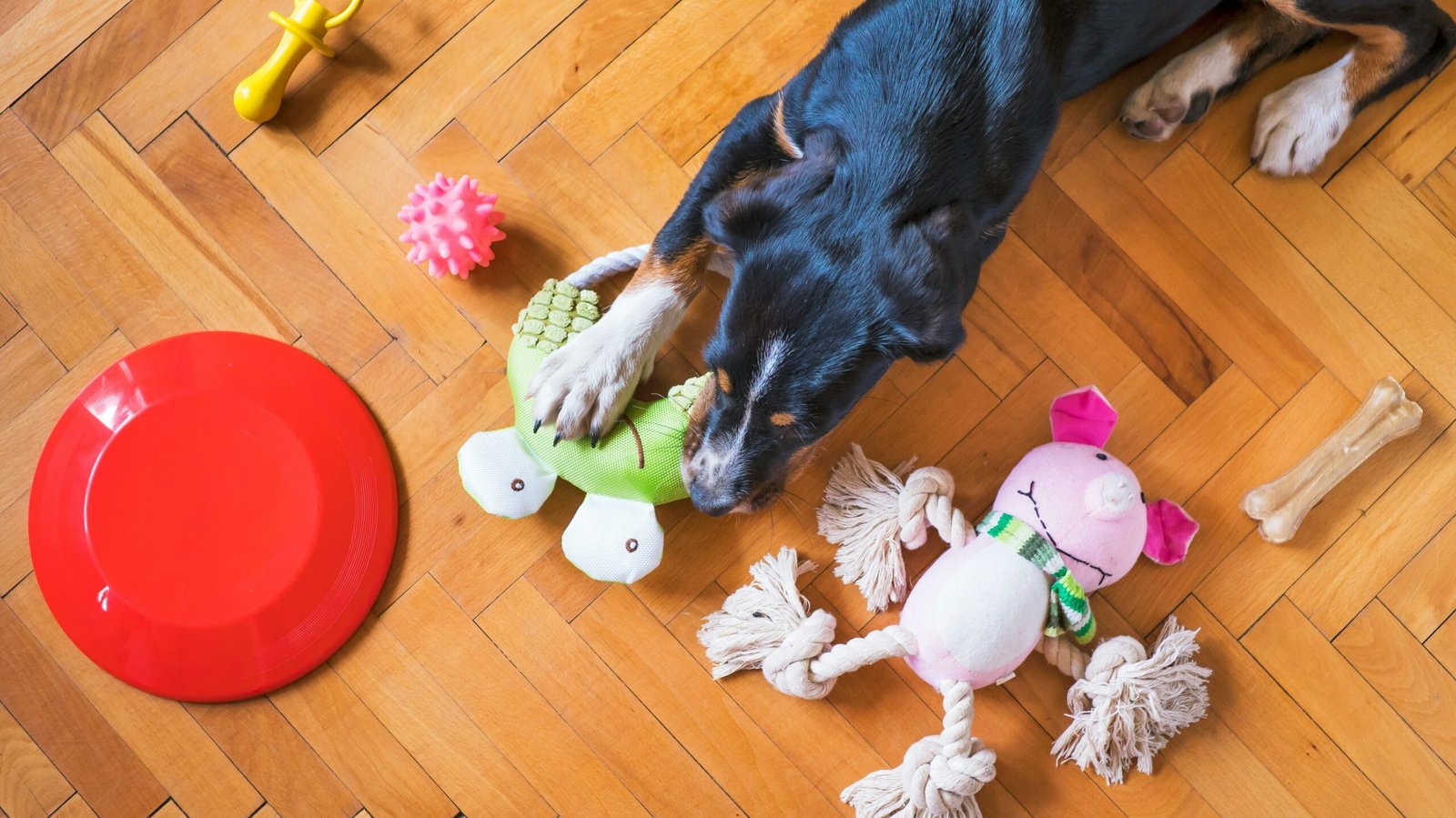
Keep 3 to 5 chew toys available and rotate them weekly so they stay interesting. Match the toy’s durability to your dog’s size and bite strength, a toy that satisfies a small senior dog won’t survive an adolescent Labrador.
Redirect, don’t punish
If you catch your dog mid-chew on something off-limits, calmly trade it for an approved toy and praise them the moment they take it. This teaches what’s fair game far more effectively than a reaction after the fact.
Add more exercise and mental stimulation
Puzzle feeders, sniff-based games, and short training sessions all burn the same restless energy that often turns into boredom chewing. That same restlessness often shows up as excessive barking too, if that’s part of the picture at your house, see our guide to stopping problem barking.

When Management Alone Isn’t Working
A couple of the recommendations below are affiliate links (full disclosure at the end of this article).
If you’ve dog-proofed the house, rotated the toys, and added more exercise, and your dog is still chewing through everything within reach, that’s genuinely discouraging, especially after putting in real effort.
At that point, the missing piece is usually a more structured way to work through the underlying boredom or mild anxiety, rather than another management trick. Before anything else, try adding one 10 minute training or puzzle session at the exact time of day your dog tends to chew most, consistency there alone often makes a real dent.
At What Age Do Puppies Stop Chewing Everything?
Teething related chewing typically peaks between 3 and 6 months old and eases as the adult teeth finish coming in, usually by around 7 months. That said, dogs never stop needing to chew entirely, what changes with good training is which objects they choose.
If destructive chewing hasn’t improved much by a year old, it’s worth looking at whether boredom, anxiety, or inconsistent redirection is keeping the habit going past the teething window.
My Dog Swallowed Part of What They Were Chewing
This is the one situation where